E-commerce
B2C
30M+ users
Torob
My full product design experience at Torob, from core shopping flows to merchant-facing systems and AI directions.
Read case studyA platform that helps people with employment barriers re-enter the job market. As a working-student UX/UI Designer & Business Developer, I designed the full platform end to end, analyzed 40+ user profiles, and co-designed services with 5 partner facilities.
End-to-end design Employment reintegration Social impact
#bastoy helps people with employment barriers re-enter the job market by making their abilities visible to employers and support facilities. I joined in Regensburg (January to November 2025) as a working-student UX/UI Designer & Business Developer and designed the platform end to end.
The role sat between design and business: I worked directly with the CEO and the business team, so every design decision had to hold up against revenue goals, not just usability.
Methodology: Analysis of 40+ real user profiles, and co-design sessions with 5 partner facilities that support people with employment barriers.
Key insights:
The problem: People with employment barriers are invisible to the job market: their skills do not fit standard CVs, and the facilities that know them best have no shared tool to represent them.
The direction: One platform, co-designed with the facilities, that:
Service touchpoints:
Principles: Accessibility, transparency, equity, and community-first thinking.
Outcomes from the first year:
My full product design experience at Torob, from core shopping flows to merchant-facing systems and AI directions.
Read case study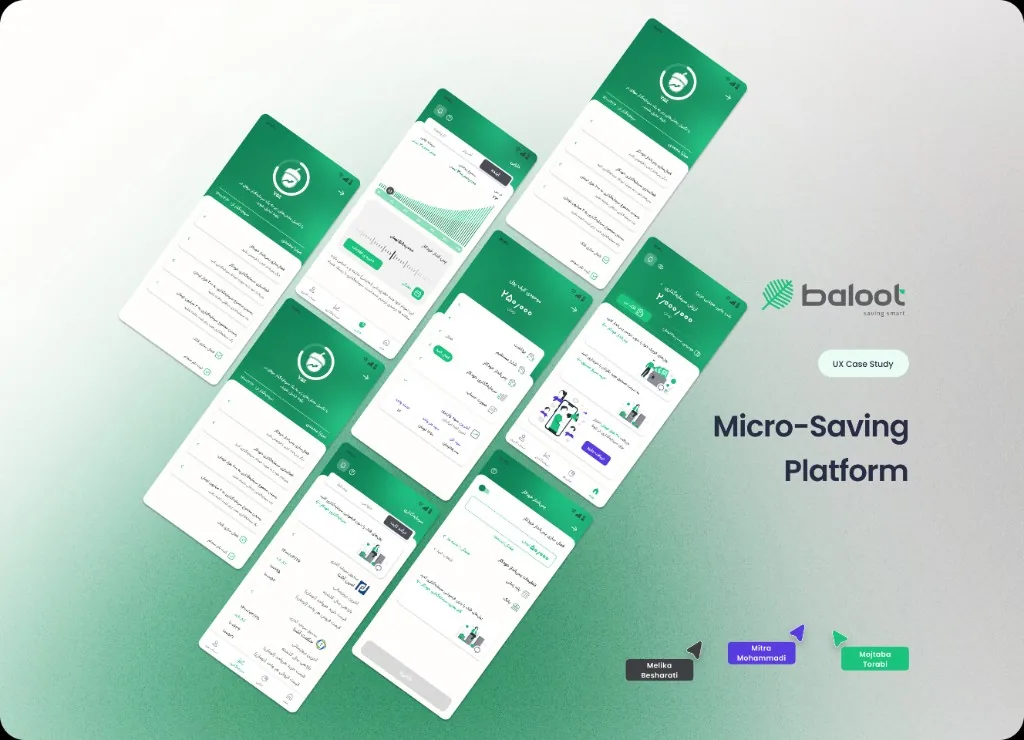
Micro-saving & investment platform. 150K downloads in 16 months, ~€1.2M saved, redesigned financial tools.
Read case study
AR guidance for museum visitors, first implemented at Golestan Palace: prototyping, research, IA, and interaction design.
Read case study
An AR museum-quest web app that turns a visit into a shared game. Designed and built for the Prototyping course at THI.
Read case study